
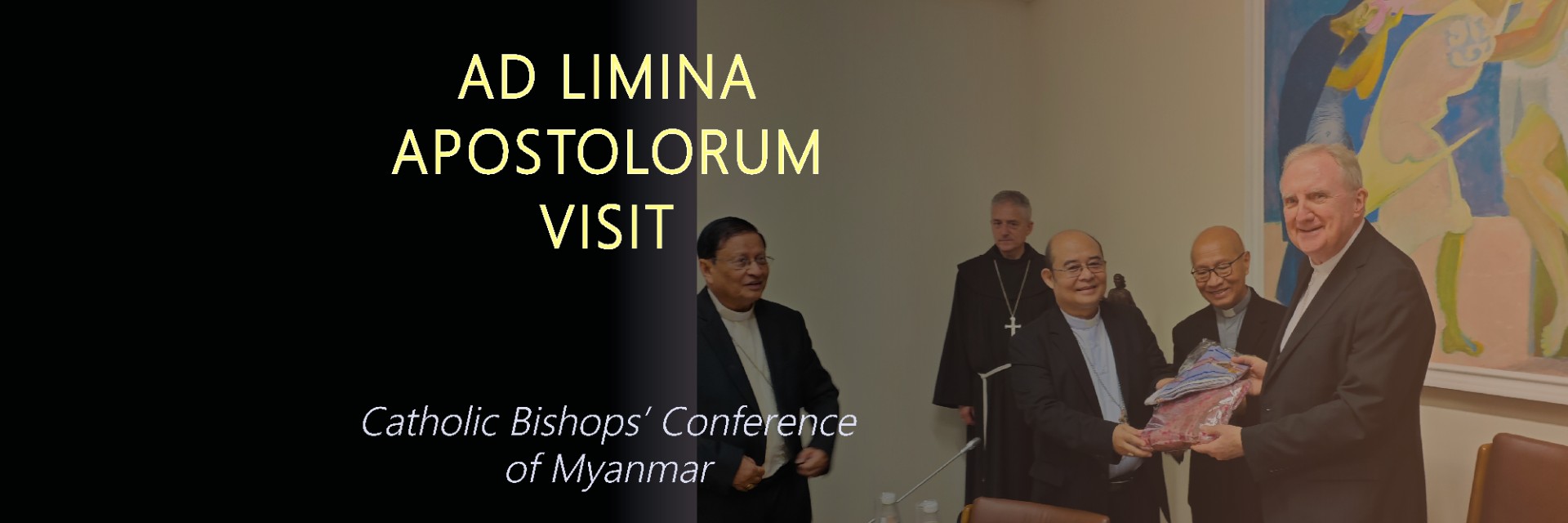
Ad Limina Visit of the Episcopal Conference of Myanmar
On 3 June, during the ad limina Apostolorum visit of the Bishops’ Conference of Myanmar, a meeting took place at the Dicastery to discuss the liturgical life of the local Churches and the principal pastoral challenges they currently face.
During the meeting, attention was first drawn to the country’s complex political and economic situation, which continues to have a profound impact on the life of Christian communities. In addition to causing serious material hardships, the ongoing conflicts have a negative effect on the cultural heritage of the various peoples and on the very possibility of freely practising religion and participating regularly in liturgical celebrations.
Particular attention was given to the translation of liturgical books and to the process of inculturation. The Bishops emphasized that these areas represent some of the principal pastoral challenges for the Church in Myanmar, especially in light of the country’s linguistic and ethnic diversity. Special mention was made of the difficulties involved in preparing translations into the languages and dialects of tribal communities, as well as of the limitations resulting from censorship, which at times also affects religious texts and terminology.
During the discussion, it was reiterated that the first requirement for authentic liturgical translation work and for a proper process of inculturation is the availability of a translation of the Bible ad usum liturgicum, which constitutes the primary source of the texts proclaimed in the celebration and the fundamental point of reference for the preparation of other liturgical books.
Among the issues discussed was also the use of contemporary music in liturgical celebrations. In this regard, it was recalled that the discernment concerning the suitability of musical repertoires and possible forms of adaptation belongs primarily to diocesan Bishops and Bishops’ Conferences, in accordance with the norms in force and with due respect for the proper nature of the liturgy.
The Bishops also shared reflections on the presence and participation of charismatic groups in liturgical celebrations, highlighting the importance of accompanying these ecclesial realities through adequate liturgical formation so that their contribution to the life of the communities may be fully harmonized with the Church’s liturgical requirements.
Finally, the need to continue the ongoing liturgical formation of both clergy and faithful was reaffirmed, so that, even amid present difficulties, the liturgy may continue to be a source of unity, evangelization, and hope for the Catholic communities of Myanmar.