
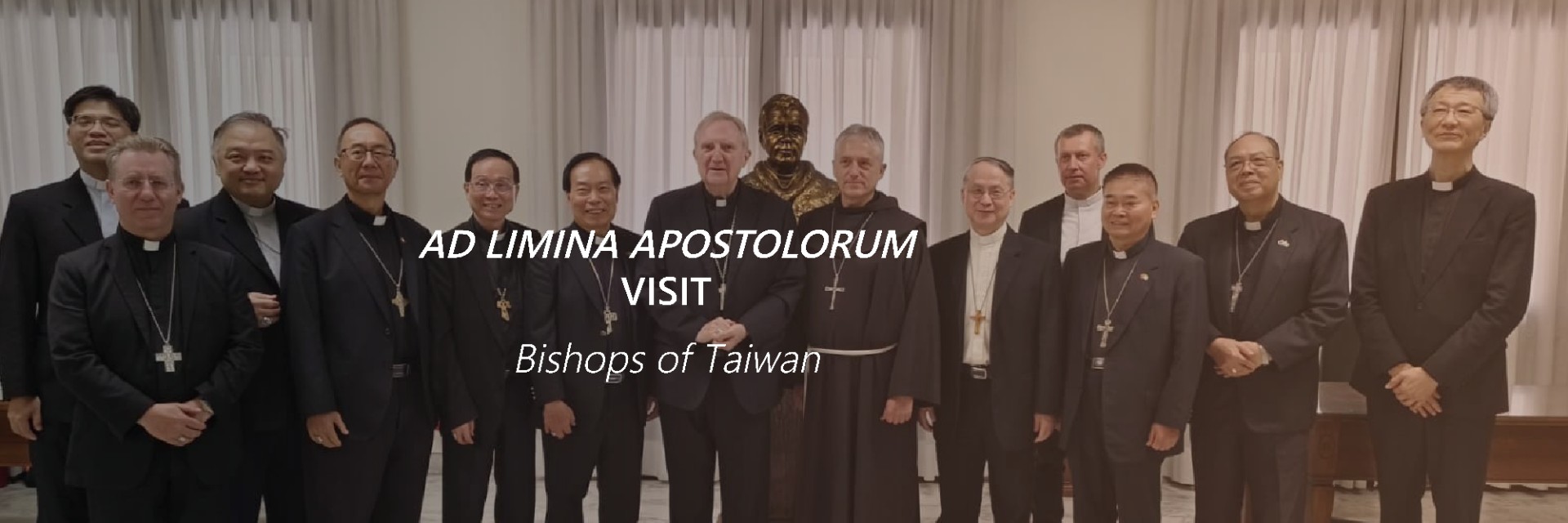
Ad Limina Visit of the Episcopal Conference of Taiwan
On Wednesday, 17 June 2026, the Bishops of the Regional Bishops' Conference of Taiwan were received at the Dicastery for Divine Worship and the Discipline of the Sacraments as part of their ad Limina Apostolorum visit.
During the meeting, the situation of the Catholic Church in Taiwan was presented. The Church is called to carry out her evangelizing mission in a context marked by a steadily ageing population and by the presence of a Catholic minority within society. The Bishops highlighted the pastoral challenges arising from a cultural environment in which the Christian faith encounters both materialistic tendencies and deeply rooted religious traditions, including ancestor veneration.
Particular attention was given to the liturgical formation of the faithful and to the need to foster a sense of the Christian mystery through an ever more conscious and fruitful participation in the sacred Liturgy. In this regard, the valuable contribution of catechists in accompanying communities and transmitting the faith was emphasized.
The Bishops also presented the current state of work concerning the translation of the liturgical books into the various linguistic forms used by the local Catholic community, particularly Mandarin, Cantonese and Simplified Chinese, with special reference to the sacramental formulas, whose approval requires the specific confirmation of the Holy Father. The status of the translation of the Ordo Celebrandi Matrimonium, currently under examination by the Dicastery, was likewise discussed.
The dialogue also highlighted the fundamental role of the National Liturgical Commission, which is engaged in the study, preparation and coordination of liturgical initiatives, as well as in the translation of liturgical texts. Likewise, the Diocesan Liturgical Commissions play an essential role in implementing the decisions taken, distributing pastoral resources and organizing formation activities at the local level.
Among the principal difficulties reported was the shortage of adequately trained experts in the field of liturgy, a situation that makes investment in specialized formation and in the preparation of new qualified personnel in liturgical matters all the more urgent.